
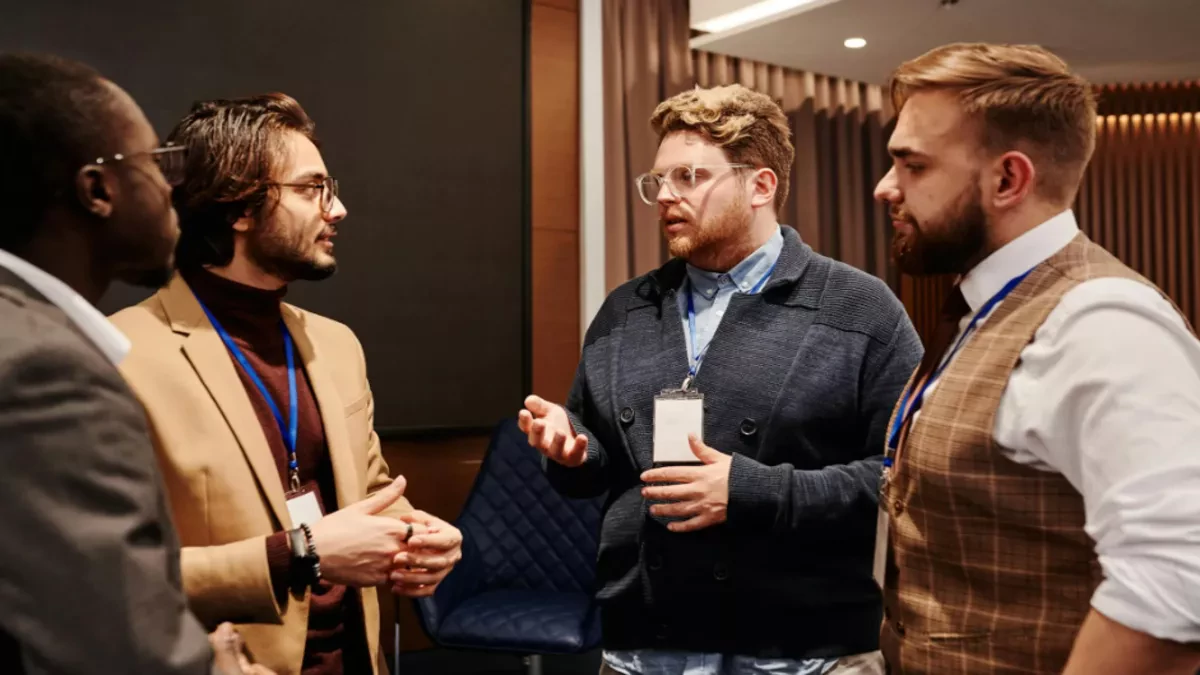
Networking events have a specific kind of energy that some people love and others find genuinely exhausting. The forced smiles. The "What do you do?" questions on loop. The nibbling on mediocre hors d'oeuvres while trying to escape a conversation that started ninety seconds ago and will not end.
If you dread small talk, traditional networking advice probably feels like it was written for someone else. Work the room. Be the first to introduce yourself. Remember three things about everyone you meet. None of this feels natural if your nervous system shuts down at the thought of shouting above ambient music to a stranger about their commute.
The good news is that most of what actually advances your career is not that kind of networking. Real professional networking looks very different, and it is built almost entirely on skills that small talk haters already have. Here is how to do it without pretending to be someone you are not.
The first thing to rewire is the definition. Networking is not schmoozing, it is not collecting business cards, and it is not attending events where you know no one. Those activities are a tiny subset of networking, and honestly, a low value one for most senior professionals.
Real networking is a slow, relational thing. It is staying in touch with five former colleagues whose careers you genuinely care about. It is replying thoughtfully when someone on LinkedIn posts something interesting. It is introducing two people who should know each other. It is being the person who remembered to follow up three months after a promising conversation.
None of that requires charisma at a cocktail party. It requires follow through, genuine interest in other people's work, and the patience to let relationships compound over years.
The single most underused network is the one sitting in your existing contacts. Former managers, old teammates, people you shared a project with five years ago, the friend of a friend you met at a wedding. These people already know you. They are dramatically more likely to respond to a message than a stranger.
Make a list of the 30 to 50 professionals in your extended circle who matter most to your career. Not the biggest names, not the most impressive titles. The ones whose work you actually respect and whose trajectory you want to stay connected to.
Then reach out slowly. Not with a request. With something genuine. "Saw you joined Stripe. How is it going there?" "Your post about AI hiring was the first thing that actually made me think about this seriously." These messages take 90 seconds to write and land far better than any cold outreach ever will.
If the idea of building a deliberate outreach plan sounds overwhelming, a focused referral and networking strategy engagement can give you a concrete 30 day plan that feels doable instead of vague.
People who hate small talk often dismiss LinkedIn as noisy and performative. It can be, but it is also the most introvert friendly networking tool ever invented.
You can think before you speak. You can revise what you say. You can reach out to someone senior without needing to corner them at a conference. You can show your expertise through writing, which plays directly into the strength of people who prefer depth to volume.
The catch is that LinkedIn only works if your profile is not invisible. A profile with a generic headline, an empty About section, and no recent activity will not generate inbound interest no matter how strong your underlying career is. Investing a few hours in LinkedIn optimization so your profile reads as clearly and confidently as your work actually is, compounds for years. Recruiters search LinkedIn every single day. Being findable is half the battle.
Post once a month if you can. Not hot takes, not engagement bait. Just a short observation from your actual work life. "Here is what surprised me about our recent migration to Postgres." "Three things I would do differently in my last performance review cycle." Those posts do more for long term visibility than five networking events ever will.
If you still want to do in person networking without the small talk overload, skip the events and invest in one to one conversations. A 30 minute virtual coffee with one person whose work you actually care about is infinitely more valuable than two hours at a mixer.
The format is simple. Send a short message. "I read your piece on distributed systems and would love to learn more about how you think about observability tradeoffs. Would you be open to a 20 minute call?" Most senior professionals say yes to requests like this because they are specific, flattering, and time bounded.
In the call, ask good questions. Do not pitch yourself, do not ask for a job, do not treat it like a networking transaction. Just have a real conversation about their work. Follow up with a thank you note and a concrete reference to something they said. Then stay in touch once or twice a year. Done consistently over a decade, this builds a network of senior allies that no conference ever could.
Random networking is a waste of time. Networking toward a specific goal is one of the highest leverage activities in a career. The difference is clarity of purpose.
Are you trying to find your next role? Then networking should target people who work at the companies on your shortlist, or who hire into roles like the one you want. Are you trying to switch domains? Then target people who made the same switch two or three years ago. Are you trying to move up a level? Then target people currently doing the job at the next rung.
Having a defined job search strategy turns your outreach from random into purposeful. Every message you send either moves you closer to the goal or teaches you something useful. Nothing is wasted.
Small talk haters often also hate asking for help. The two tendencies are related. Both feel like intrusion, both trigger worries about being a burden, both lead to people doing too much alone.
The reality is that asking for help from the right person, at the right moment, with a specific and bounded ask, is one of the most respected professional moves. "I am exploring roles at Anthropic and noticed you know someone there. Would you be open to a referral?" is a clean, direct, easy to say yes to request. It is not needy. It is not pushy. It is how most great opportunities actually travel.
Senior professionals help each other constantly. The people who miss out are usually the ones too proud or too anxious to ask. Working with experienced career mentors early in your career is often the fastest way to rewire this, because you see firsthand how comfortable senior people are with mutual help.
One last move that works especially well for introverts. Become the person who introduces other people to each other. Match people in your network who should know each other. Forward a job posting to someone who would be a great fit. Share an article that one of your contacts wrote with someone who would benefit from reading it.
This activity is almost entirely behind the keyboard. No small talk required. And it builds social capital faster than anything else, because people remember the introducer who changed their career trajectory.
Platforms like BeTopTen operate on this same principle. Senior leaders who want to give back to the next generation become a mentor precisely because they know that a single well timed conversation can matter more than a hundred transactional networking moments.
If small talk drains you, stop forcing it. Networking done well is a slow, thoughtful, deeply introvert friendly activity. Play your own game, and your network will compound in ways that the loud version of networking never could.

How a Mentor Can Help You Stop Drowning in Stressful Workdays.

How a Mentor Can Help You Switch From Developer to Engineering Manager.

What Your Mentor Would Tell You Before a System Design Interview.